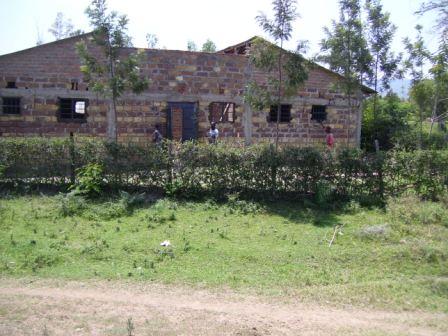
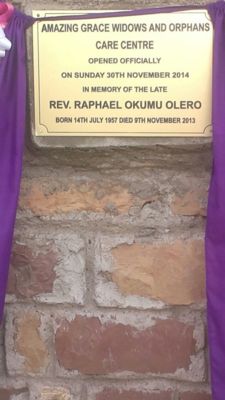
On November of 2014, the construction of a dormitory designed to house 7 widows and 12 orphans was completed on the Amazing Grace Orphans and Widows Care Center site (picured above). This has been an answer to prayer that was initially dreamed by Pastor Raphael Olero decades before in reponse to the Aids epidemic that has left so many orphans and widows in Kenya.
The dormitory building consists of 7 bedrooms, a great hall, 2 public bathrooms, a store room and a living space for a care taker. The walls of the building are stone, the interior walls plastered and the roof is composed of iron sheets. All of the rooms have electic lights and outlets.
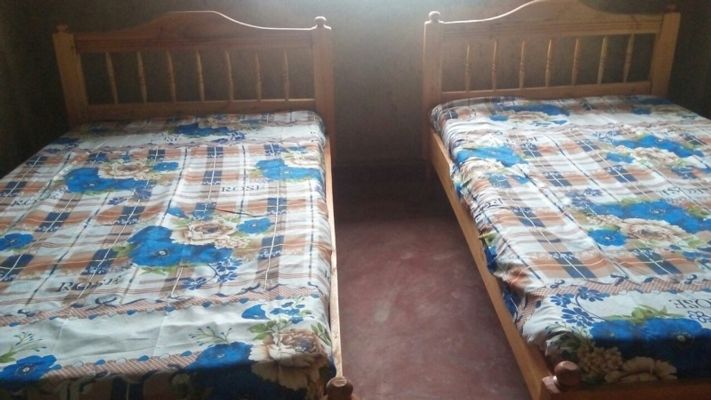
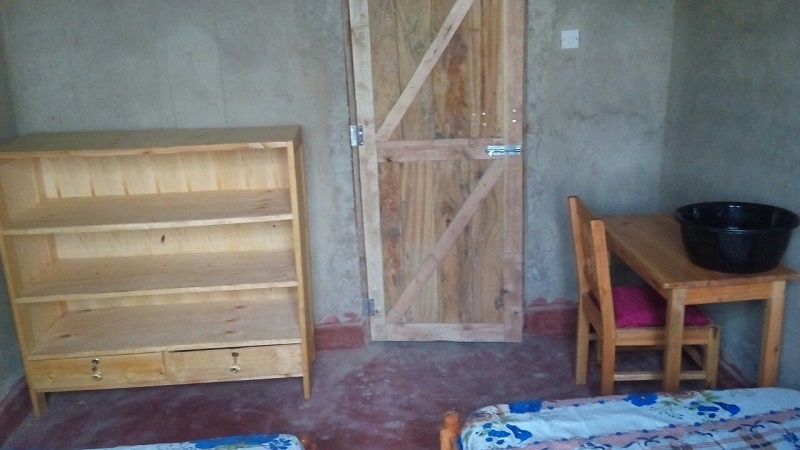
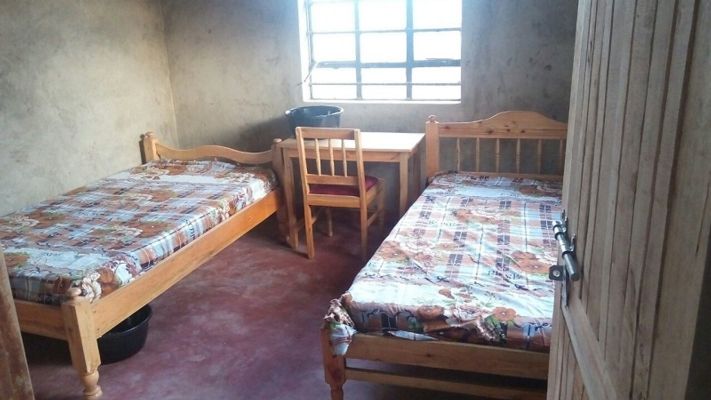
In October, half of the center was furnished. The pictures below show the type of furnishings found in the 3 rooms.
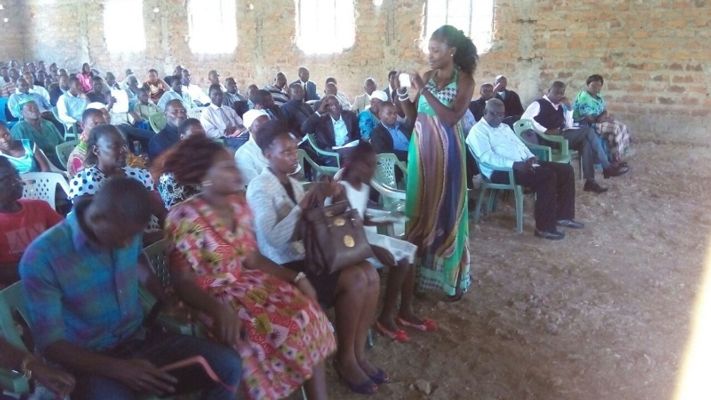
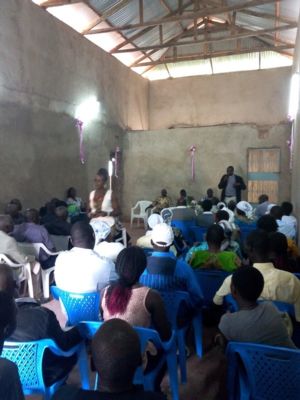
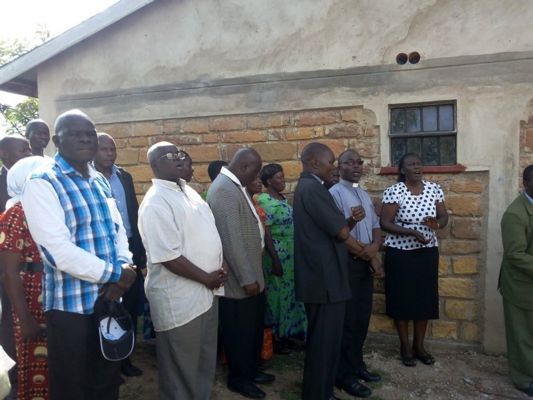
On November 30, 2014 the dormitory was dedicated. First, there was a celebration of Pastor Raphael Olero’s life in nearby Kondu at a church where Pastor Rapael’s had frequently preached.
After the service in Kondu, the celibration moved to the Amazing Grace Care Center for a dedication of the new dormitory. There, the widows, orphans, center staff, local clergy and community leaders united for a service that dedicated the dormitory to God’s work to support those in the community that have no voice due to their circumstances. After the service, the plack mounted on the entry way to the dormitory that memorialized Pastor Olero’s work was unveiled.
The following section records the completion of various of phases of the dormitory. The dormitory was built in three phases. Phase 1 and 2 are complete, while phase 3 is ongoing.
Phase 1) Completed
– Foundation 2011
Phase 2) Completed
– Walls completed Sep 2012
– Lintels (top of walls) completed Dec 2012
– Roof timbers completed Jan 2013
– Iron sheets for roof completed. Mar 2013
– Windows and Doors Jun 2013
– Great Hall Roof Apr 2014
– Glass in windows Apr 2014
– Grand Hall Furnishing May, 2014
– Plastering walls Aug 2014
– Electical conduits, lights, outlets Oct 2014
– Furnishing 4 bedrooms Nov, 2014
Phase 3) Future
– Furnishing 3 bedrooms and office
– Bathroom
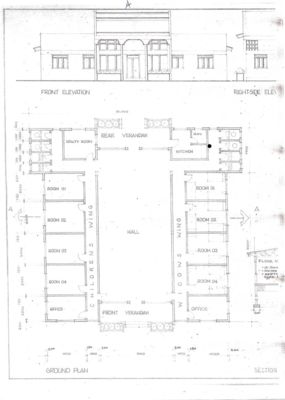
The following diagram shows the original building elevation and the layout. The plan was modified to have a peaked roof, 6 rather than 8 bedrooms, the kitchen was moved outside and the front veranda was replaced by a living space for the care taker.
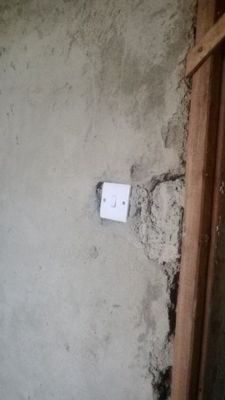
Each room is equiped with a 220 V outlet, and electric light with a wall switch. The great hall has switch operated bulb and flourescent lights (at left and center). The picture at right shows the switch in one of the rooms. While the entire buidling is now wired, there is a breaker box designed to turn off the power to the currently unused wing of the center.
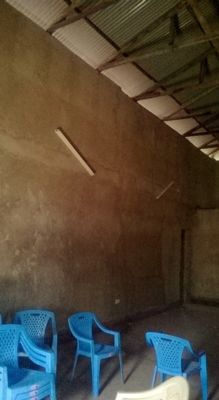
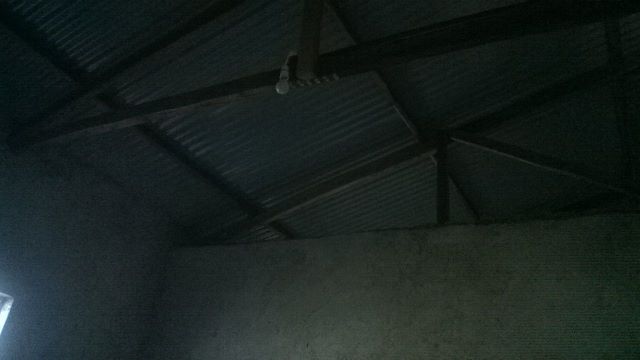
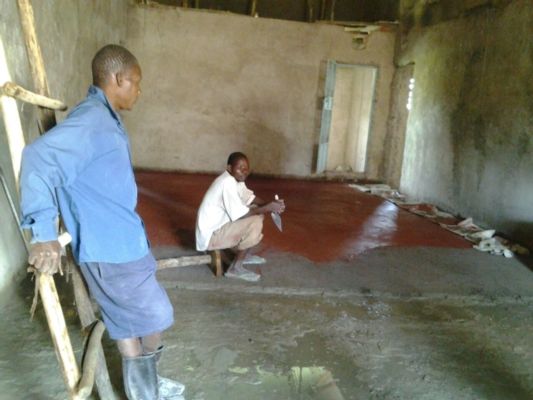
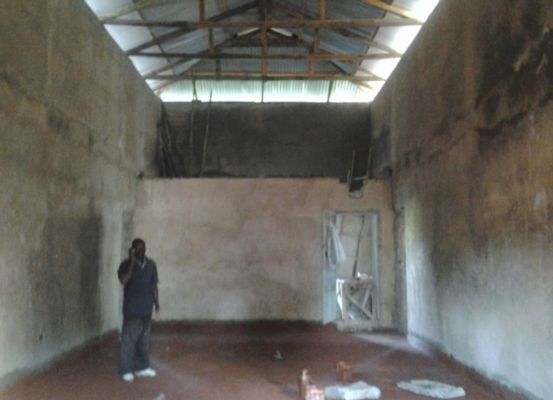
Since the construction of the dormitory is rough cut stone and brick, most of the interior walls are also rough and need to be plastered over to make them smooth and create an inviting room. Accordingly, during the summer of 2014 the walls were plastered, with the completion in August 2014. Note that floor of the center is a red painted cement that was covered in excess plaster (picture below left) as the plaster was applied to the walls. Once the plastering was complete, then the floors were cleaned the the red floor was again seen (picture below right).
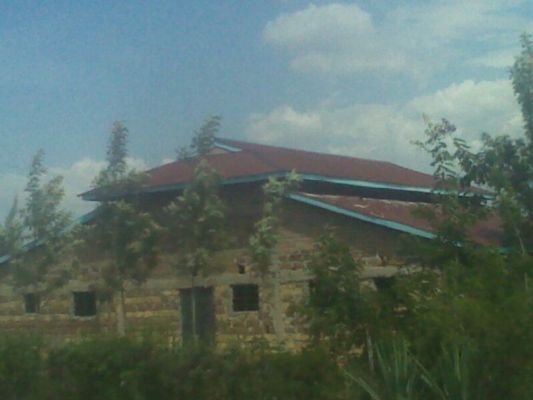
The picture below shows the new great hall roof, the glass windows installation and external plastering.
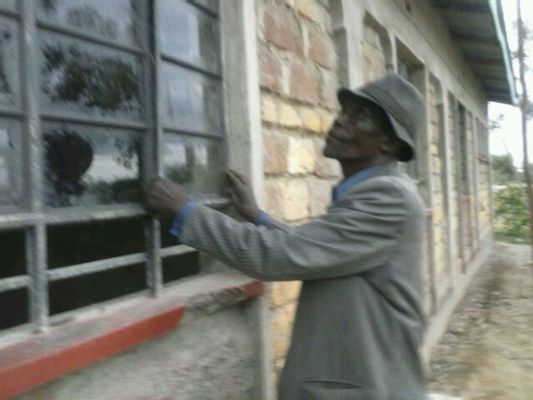
Here are several past picture of the construction.
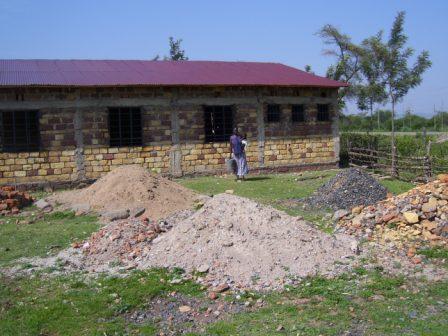
In June and July of 2013 year, $820 was sent to the center to install windows and doors to the dormitory. In August, the doors and window installation was complete The picture directly below shows the side of the building and the next pictures shows the end of the building. If you take a close look, you can see the windows.
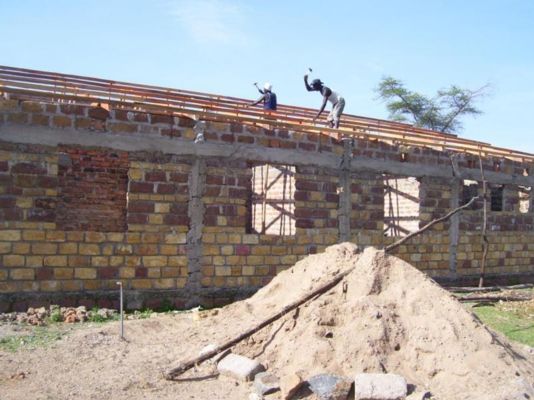
In Janary 2013, $2000 was sent to the center for the starting the center roof. With that money, the timbers were attached to the lintels (the top of the walls). The roof can be see in the picture below. Early in February, $1890 was sent to the center to buy the metal sheets that are attached to the timbers to finish the roof.
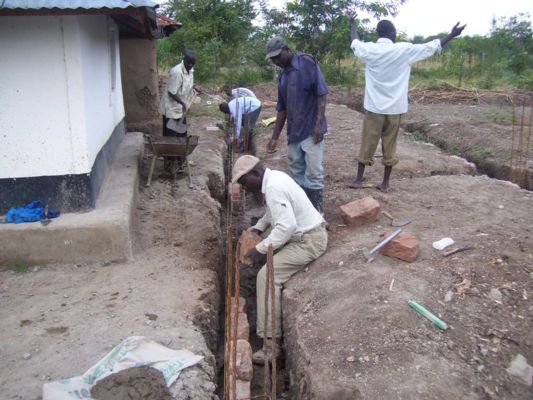
Foundation construction (2011): The trenches that were dug by hand for the stone foundation. The picture below shows workers placing bricks in the trenches along with rebar for strength.
Once the Brick foundation was complete, then the entire concrete floor were poured. In order for the concrete not to crack, the children of the center poured water on the concrete to slow up the drying process and prevent cracks.